

Agar Agar Snacks: Best Ones from Japan

Karina Ikedo

Posted on October 15, 2024
Share:
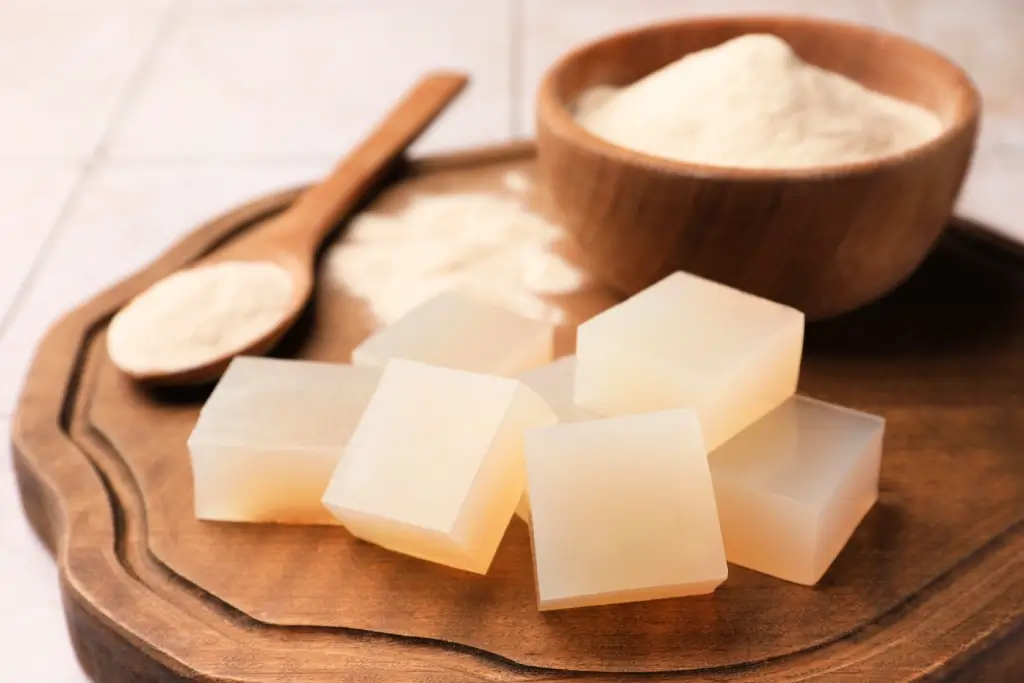
Agar agar is a delightful ingredient derived from red algae. It’s also versatile and flavorless jelly, lending its signature wobble and firm-yet-yielding texture. The legend goes that a 17th-century Japanese innkeeper discovered some leftover seaweed soup had gelled overnight. This powder has been used as a gelatin-like setting agent in the kitchen. It’s also a vegan substitute for gelatin and can be used in various desserts.
From exquisite wagashi (Japanese confectionary) to the classic sweet coffee jelly, this delightful jelly is the secret star ingredient. Here’s everything you need to know about this ingredient and the best desserts featuring this beloved ingredient!
What is agar agar?
Agar agar is a plant-based gelatinous setting agent extracted from red algae. While it can be derived from different types of red algae, the most common one used is ogonori. It’s flavorless and doesn’t have a salty flavor like other types of seaweed. As a result, it won’t alter the taste of other ingredients. It’s made by harvesting red seaweed, boiling, hardening, and sun-drying during the dry winter season between December and February.
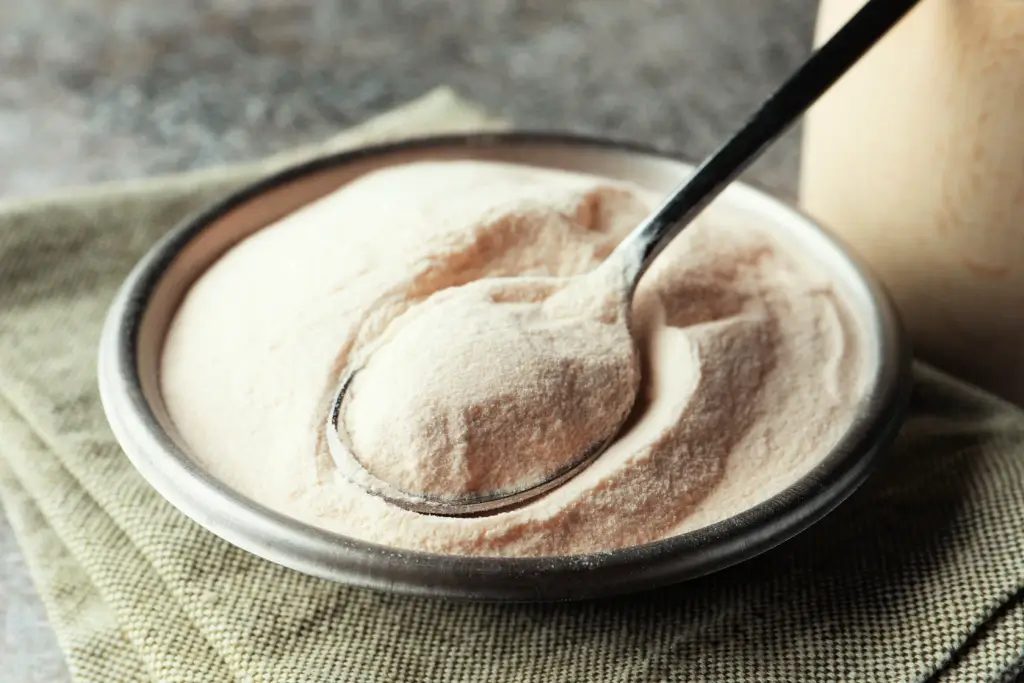
The semi-translucent vegetable gelatin, used as a stabilizing and thickening agent, is sold in flake, powder, and bar form. It doesn’t need to be refrigerated to set, which makes it versatile, low-calorie, and vegan. This ingredient is naturally rich in fiber and minerals, such as phosphorus, potassium, iron, chlorine, iodine, cellulose, and protein. Therefore, it can also promote weight loss and optimal intestinal functioning.
Kintsuba
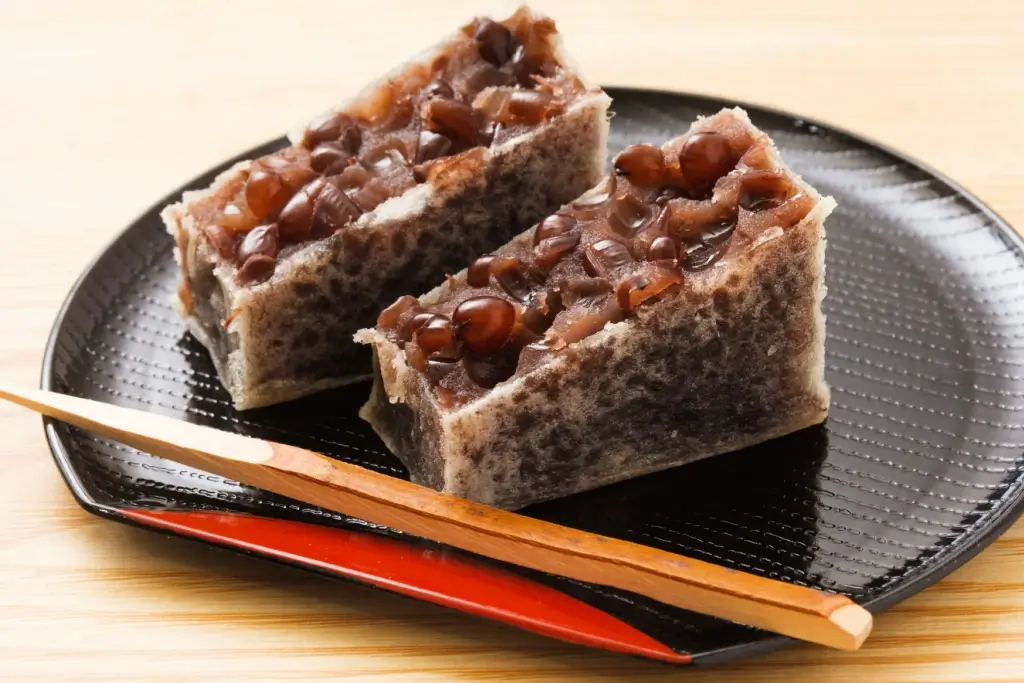
Kintsuba is a popular sweet enjoyed in Japan, commonly found in traditional Japanese sweet shops and at festivals. It’s a yokan (jellied dessert) with an outer crust. It’s a square sweet made with agar agar, water, sugar, and flour wrapped around bean paste. The flour is used as a batter to create the outer crust by heating it in a pan. The sweet bean paste and the chewy outer layer make it a delightful treat. Variations use white bean paste or sweet potato as the filling. Kintsuba pairs perfectly with green tea.
Mitsumame
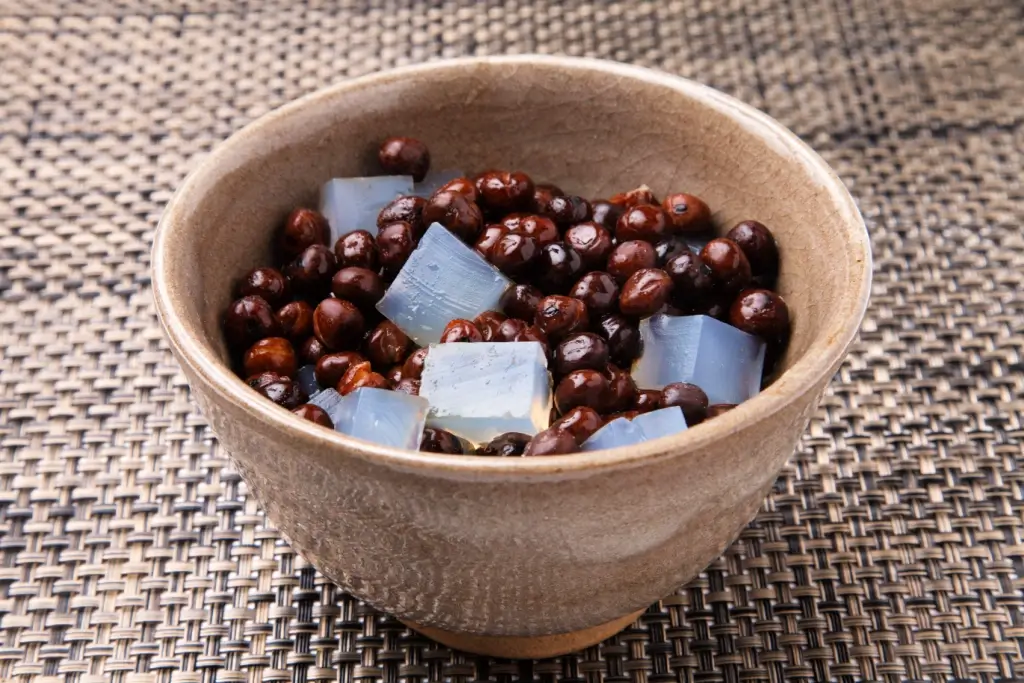
Mitsumame is a Japanese dessert featuring jelly cubes that resemble ice. The jelly for mitsumame is usually made with sweetened water and agar agar is cut into rectangles to resemble ice cubes. It’s made with a bowl of fruit, sweet red peas, and ice cream. It’s also sweetened with kuromitsu (brown sugar syrup) or simple syrup. It also has a well-balanced, silky texture and mild sweetness.
Can’t make it out here, but do you want to try some exclusive Japanese sweets? Check out Sakuraco! Sakuraco delivers traditional Japanese snacks, teas, and sweets from local Japanese makers directly to your door so you can enjoy the latest treats directly from Japan!

Kanten
Kanten is a gelatin extract derived from drying out seaweed mucilage. Japanese people use kanten in numerous ways. Most commonly, it’s used to make wagashi, though it can also be incorporated in savory dishes.
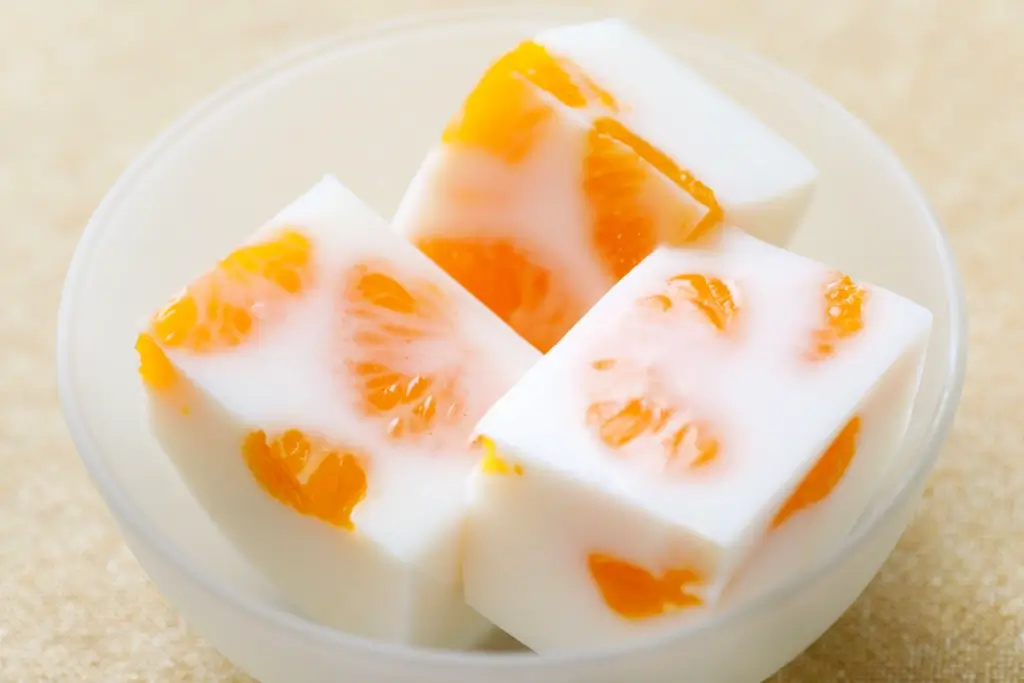
Delicious jellies can be made using fruit juice or milk and are popular in Japan as a healthy treat. Apart from its culinary appeal, kanten also offers some health benefits. High in fiber, kanten treats constipation and reduces cholesterol levels. Additionally, it is rich in minerals such as calcium and iron, contributing to a well-rounded nutritional profile.
Coffee Jelly
Japanese coffee jelly is a chilled gelatinous dessert flavored with sweetened, strong coffee. Created during the Taisho period (1912–1926), the original British recipe used animal collagen from calves’ bones. This coffee jelly is a refreshing Japanese summertime treat made with coffee, powdered gelatin, and sugar. You can serve it with frozen whipped cream, chocolate sauce, ice cream, or flavored coffee cream.
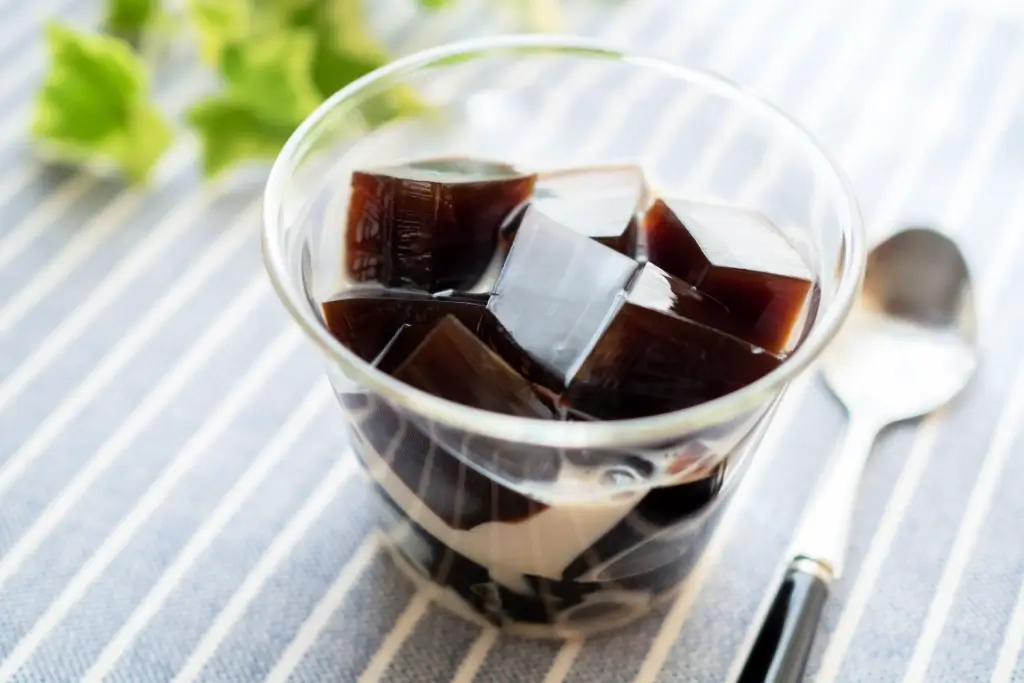
It can also be served solid in glasses or cubed in bowls. This coffee jelly dessert can be found at many konbini (convenience stores), coffee shops, bakeries, and restaurants. Japanese coffee jelly is the ultimate dessert for grown-ups and coffee lovers with its bold coffee taste and flavor.
Anmitsu
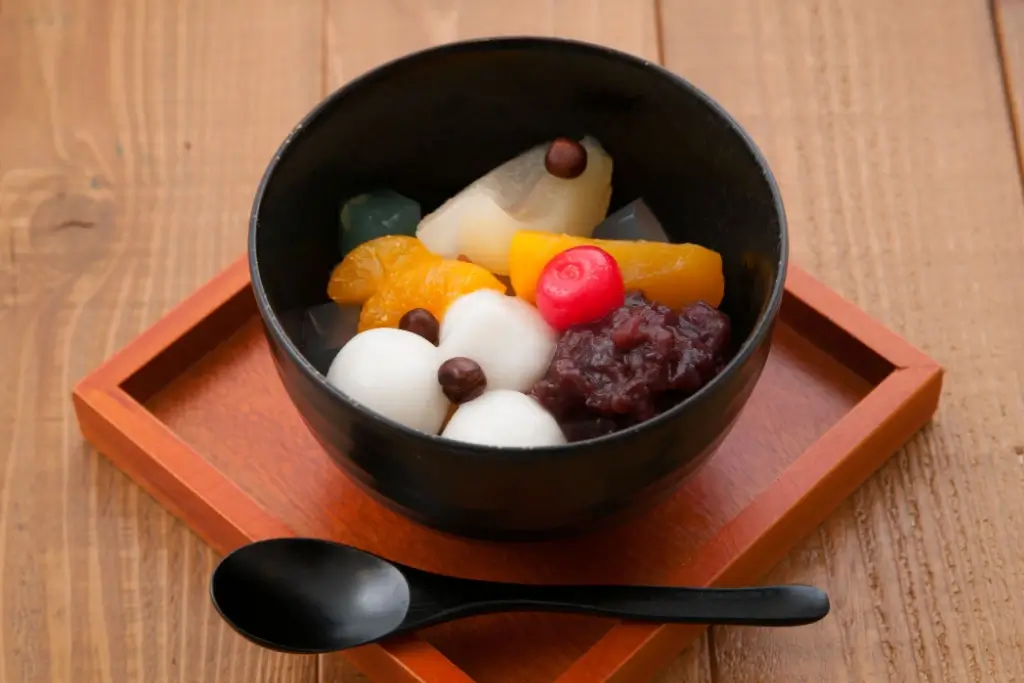
Anmitsu is a traditional Japanese summer dessert made of small cubes of semi-translucent jelly. It is typically served with fruits, shiratama dango (glutinous rice dumplings), and anko (red bean paste). The dessert is then topped with a scoop of matcha (Japanese green tea) ice cream, and kuromitsu drizzled over it. You can make the jelly ahead of time, and the rest of the dessert can also be assembled.
Why is agar agar so common in wagashi?
People love agar agar in wagashi because it’s a vegan-friendly jelly option since seaweed is its only ingredient. Plus – it contains virtually no calories. It’s an indispensable ingredient in wagashi, such as kanten, coffee jelly, anmitsu, and other beloved Japanese desserts. Agar agar adds extra delight to Japan’s best sweet treats. Have you made Japanese desserts with kanten before? Have you tried it before? Share your thoughts in the comments below!

Discover authentic flavors with Sakuraco
Get Sakuraco 
Discover authentic flavors with Sakuraco
Get Sakuraco
Related Articles
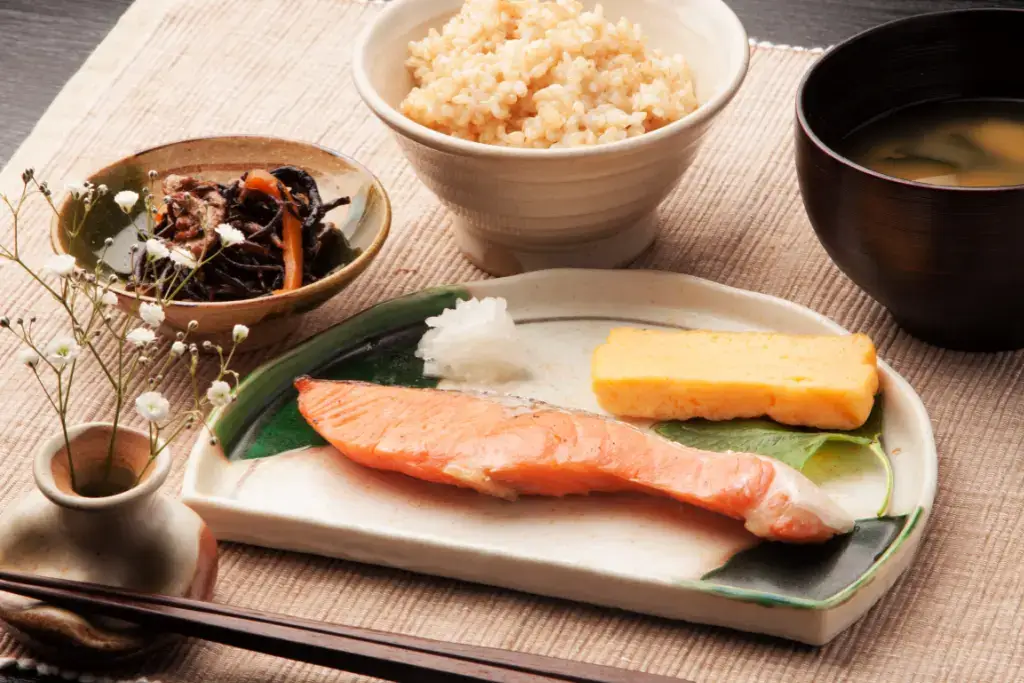
Japanese Breakfast: A Complete Guide to this Traditional Meal!
Instead of one big dish, a traditional Japanese breakfast has several small plates that balance flavor, color, and nutrition. It’s about enjoying a peaceful, thoughtful, and fulfilling meal.
Kyushu Ramen and Sushi: More Great Dishes!
Kyushu Island is located at the southwestern tip of Japan. It is one of Japan’s main islands, and contains seven prefectures: Fukuoka, Saga, Nagasaki, Kumamoto, Oita, Miyazaki, and Kagoshima. Kyushu ramen and sushi are famous across the country, but there are many other tasty dishes from the region.

Japanese Coffee and Matcha: What’s the Difference?
Regarding traditional Japanese beverages, matcha (Japanese green tea) often takes center stage. Its vibrant green hue and deep, earthy flavor make matcha instantly recognizable.
Healthy Snacks From Japan: Six Awesome Foods to Try!
Healthy snacks from Japan are made with natural ingredients and just the right flavor, from crispy seaweed full of vitamins to crunchy beans and nuts that give you energy. These snacks are great for munching without feeling too heavy. Pickled vegetables help your gut stay healthy, and konnyaku (konjac plant jelly ) is soft, chewy, and almost has no calories.