


Tradition Meets Innovation: Hokkaido’s First Five-Story Pagoda

Karina Ikedo

Posted on January 23, 2026
Share:
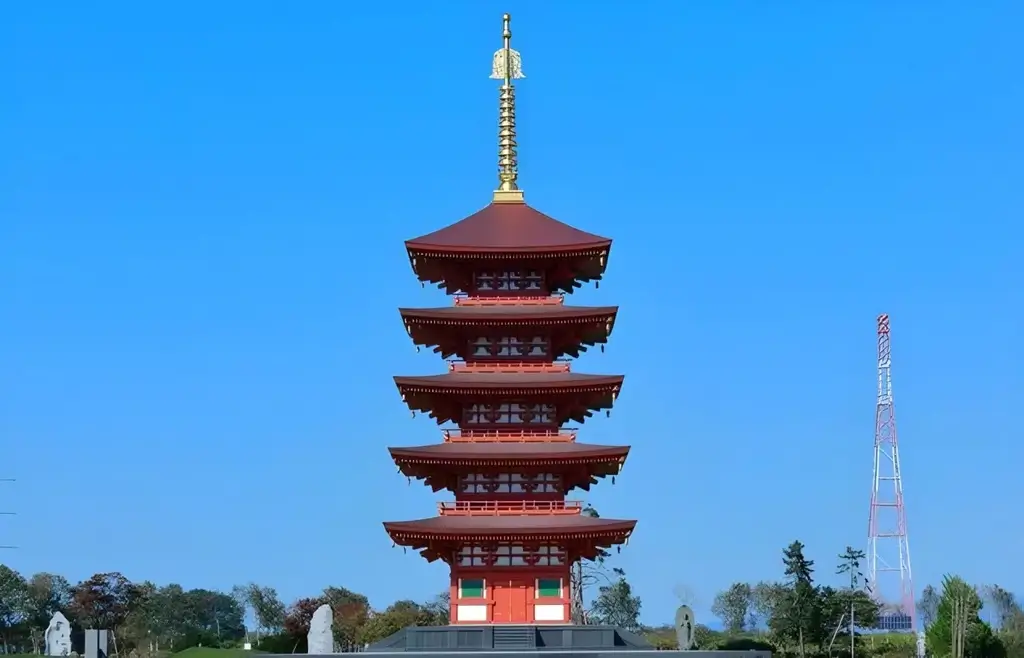
When people think of a Japanese pagoda, they often imagine ancient temples in Kyoto or Nara. Hokkaido, Japan’s northernmost island, is known for cold winters and strong winds, so it rarely comes to mind. Because of this, many believed wooden Buddhist buildings could not survive there. However, a beautiful five-story tiered building now stands under Hokkaido’s northern sky. It shows how tradition and modern engineering can work together.
It was completed in October 2025 at Koshoin Temple in Ishikari and is the first five-story wooden pagoda ever built in Hokkaido. Moreover, it’s also the northernmost wooden pagoda of its size in Japan, standing 33.3 meters tall. Not to mention, its bright red color recalls the feel of Japan’s ancient capitals. Keep reading to discover how modern technology made this incredible tiered building possible in Japan’s harsh northern climate.
A Pagoda Once Thought Impossible
For many years, officials said building a wooden pagoda in Hokkaido was unrealistic. Strong winds, deep snow, and freezing temperatures were thought to damage wood buildings. As a result, government leaders suggested using steel instead of wood. However, head priest Kako Sato disagreed with that idea. He believed an authentic pagoda should be made of wood.
Wooden pagodas can last hundreds of years with proper care. Sato felt steel buildings would not last as long. His decision was based on faith and family history. Koshoin Temple was founded in 1980 and is linked to Daigoji Temple in Kyoto. The temple also manages the large Barato Cemetery. Sato’s father once dreamed of spreading Buddhist culture in Hokkaido. He wanted it to grow as it did long ago in Hiraizumi. Building it helped honor his father’s dream. It also created a lasting place for prayer in northern Japan.
Are you interested in enjoying some delicious snacks from Hokkaido? Check out Sakuraco! Sakuraco delivers traditional Japanese snacks, teas, and sweets from local Japanese makers directly to your door so you can enjoy the latest treats directly from Japan!

The Role of Modern Engineering
Making this vision a reality generally required blending ancient design with modern technology. The architect, Yoshio Yonehara, had experience designing traditional Japanese buildings. He previously designed two other five-story pagodas in Japan. Even with experience, this project was especially challenging.
Yonehara also studied weather data from Hokkaido before designing it. The data showed that strong winds were a bigger problem than snow. This information changed how this tiered building was built. Copper roofing replaced tiles to prevent cracking in freezing temperatures. Some floors were left open so snow could fall through.
Its base was raised 2.4 meters above the ground. This kept it above the usual winter snow level. Long piles were driven deep into the ground for stability. Modern engineering helps protect the pagoda’s ancient shape. Because of this, the tiered building can survive Hokkaido’s harsh climate.
Inspired by a Heian-Era Masterpiece
Even with modern improvements, it still looks deeply traditional. Its design is based on the famous five-story pagoda at Daigoji Temple in Kyoto. That original tiered building was built during the Heian Era, over 800 years ago. Therefore, it is considered one of Japan’s Three Greatest Pagodas.
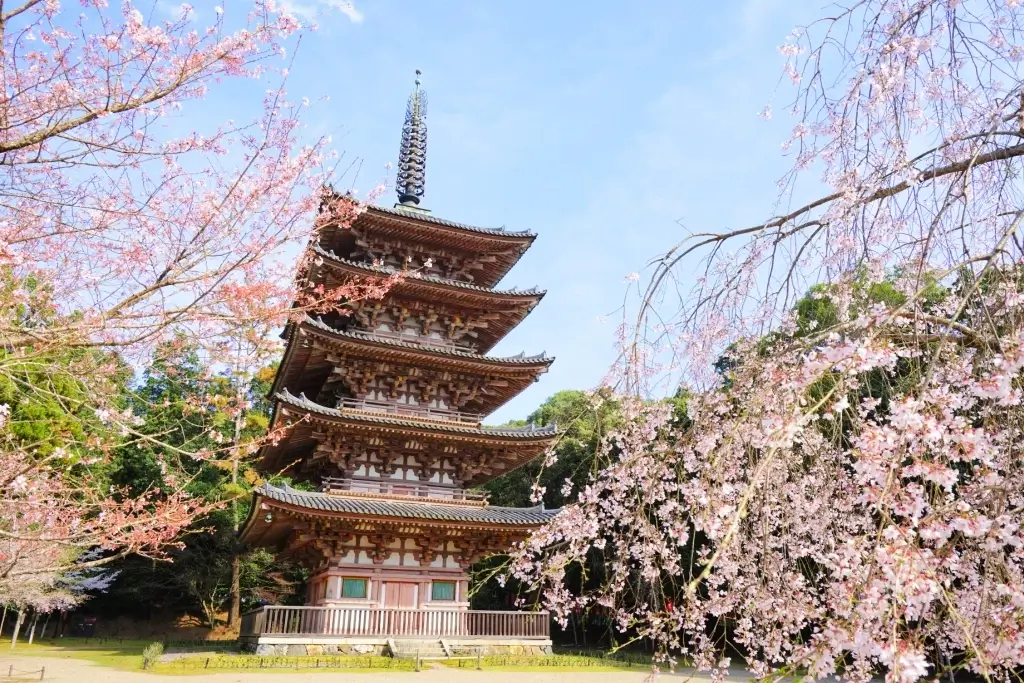
People admire it for its beauty and balanced shape. Architect Yoshio Yonehara wanted to copy more than just the structure. He wanted the pagoda to feel peaceful and spiritual. He carefully studied the size and shape of every level. This gives Koshoin’s tiered buildings a unique, almost dreamlike look.
It stands against Hokkaido’s vast sky and open fields. This is because it looks both familiar and surprising at the same time. It feels like ancient Japan has been placed gently in a modern setting. Building this tiered building took about three and a half years. This shows the care and precision that went into the project.
A Symbol for the Next Thousand Years
Today, it is more than just a building. It is a symbol of culture, faith, and hope. For head priest Sato, it shows a bright future for Hokkaido. He believes the region needs more places for prayer and reflection. It offers a calm space as Hokkaido continues to grow. Sato says the pagoda will watch over Hokkaido for 1,000 years.
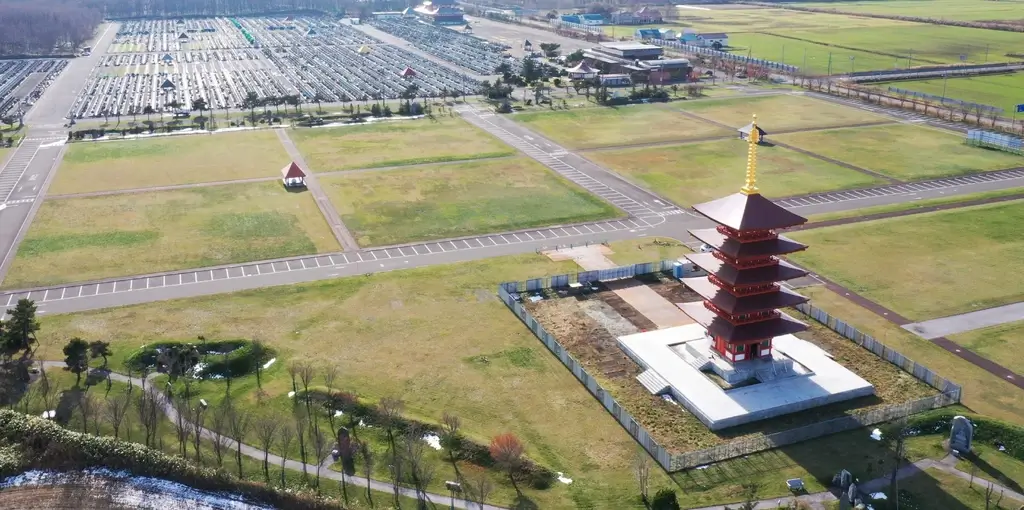
He dreams it will one day become a national treasure. It also reflects Hokkaido’s pioneering spirit. Early settlers faced harsh weather as they built new lives. This one-of-a-kind tiered building shows the same strength and determination. It proves that tradition and innovation can work together.
Visitors see the five-story, tiered building rising into the northern sky. It reminds them that Japan’s architecture is still alive today. Even in Hokkaido’s cold winds, it continues to reach new heights. What surprised you most about building a wooden pagoda in Hokkaido’s harsh climate? Do you think traditional buildings can survive in modern environments like this one? Let us know in the comments below!
Cited Sources
- The Asahi Shimbun. “Tradition and technology seen in Hokkaido’s 1st 5-storied pagoda.“
- Travel and Tour World. “Koshoin Temple’s Five-Storied Pagoda: A Must-See for Tourists in Hokkaido.“
- ZEKKEI Japan. “10 Must-Visit Shrines in Hokkaido”.

Discover authentic flavors with Sakuraco
Get Sakuraco 
Discover authentic flavors with Sakuraco
Get Sakuraco
Related Articles

Akidearest Talks About Living in Japan & Creating Content
Excerpt
Akidearest shares her journey as a creator, her experiences living in Japan, thoughts on internet culture, favorite anime, and the everyday moments that continue to inspire her both online and offline.

Okinawa Folklore: The Legends of Japan’s Southern Islands
Okinawa is famous for its beautiful beaches, unique culture, and rich history. Located in the southernmost part of Japan, the islands were once the independent Ryukyu Kingdom before becoming part of modern Japan.
Imperial Hotel Kyoto: A New Chapter for a Historic Gion Landmark
The Imperial Hotel Kyoto represents one of the most significant hotel openings in Japan in recent years. Located in Kyoto’s famous Gion district, the luxury property combines modern hospitality with the preservation of an important cultural landmark.
Samurai Exhibit at the British Museum Showcases Complex History
For many people outside Japan, the word “samurai” immediately brings to mind armored male warriors carrying swords into battle. Films, television, and video games have reinforced that image for decades. But the British Museum’s major 2026 exhibition, “Samurai,” presented a broader, more historically layered interpretation of Japan’s warrior class — including the important role women played within it.