


Kyoto at Night: Five Places to Explore After Dark

Tokyo Terry

Posted on March 25, 2026
Share:
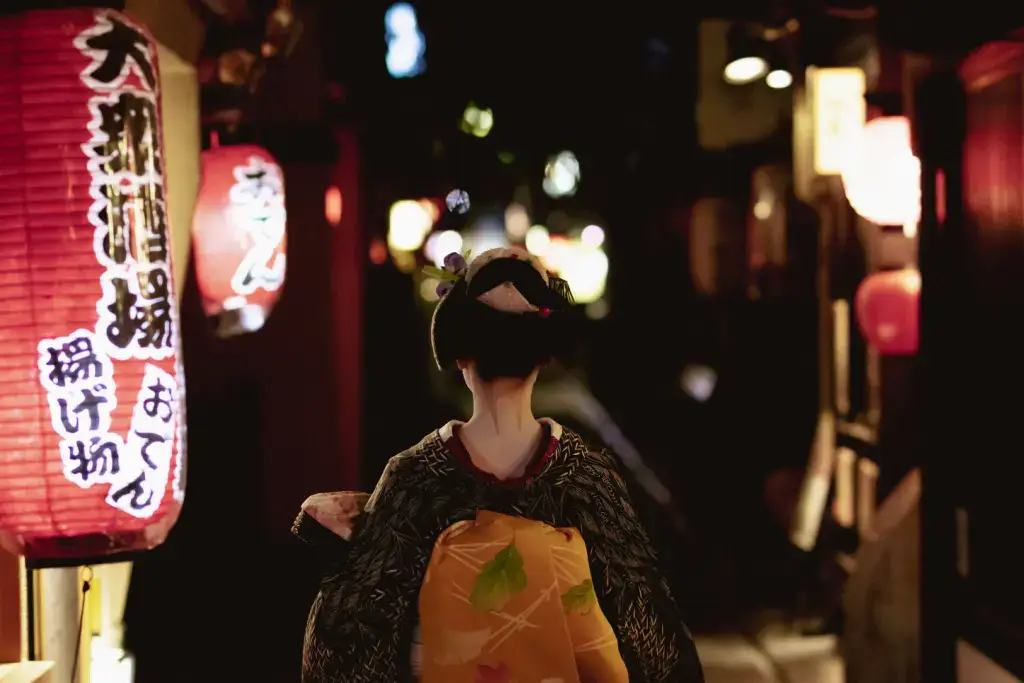
Add a unique touch to your trip by exploring attractions after dark. When the sun goes down, many popular sites that feel too “touristy” by day reveal an entirely different atmosphere. Kyoto offers countless spots like these—temples, shrines, and districts that bustle with crowds in daylight turn into peaceful places for quiet walks and reflection at night.
These destinations attract those seeking a serene atmosphere, beautiful lighting, and a touch of nighttime thrill. Today, we’ll discover five places to visit in Kyoto at night, take a brief look at their history, and learn about their special features.
What makes Kyoto special at night?
The city of Kyoto shifts into a calmer rhythm when the sun and lights begin to flicker on. It’s a great time to relax and enjoy thinner crowds after the daytime activities, especially in summer. One of the most popular Kyoto nighttime activities for visitors is simply exploring the city on foot. The soft glow of lanterns illuminates the traditional neighborhoods as you explore the narrow alleys. And temples sometimes feature light displays during spring or fall, adding to the charm.
At night, subtle aromas also drift from evening bars and local food spots. They offer the chance to try regional drinks, such as smooth Kyoto sake or herbal shiso cocktails, as well as foods like grilled eel skewers and vegetable tempura. Strolling through riverside neighborhoods like those along the Kamo River creates a magical atmosphere, with lights reflecting off the water and outdoor terraces serving casual bites under the stars.
Gion District
The Gion district is located in eastern Kyoto on the banks of the Kamo River. It first became popular as an entertainment hub during the Edo Period (1603-1868). The traditional entertainment that began here in the 1700s continues to this day. Geisha and maiko often wear vibrant kimonos as they head toteahouses, where guests are treated to shows and classic dishes.
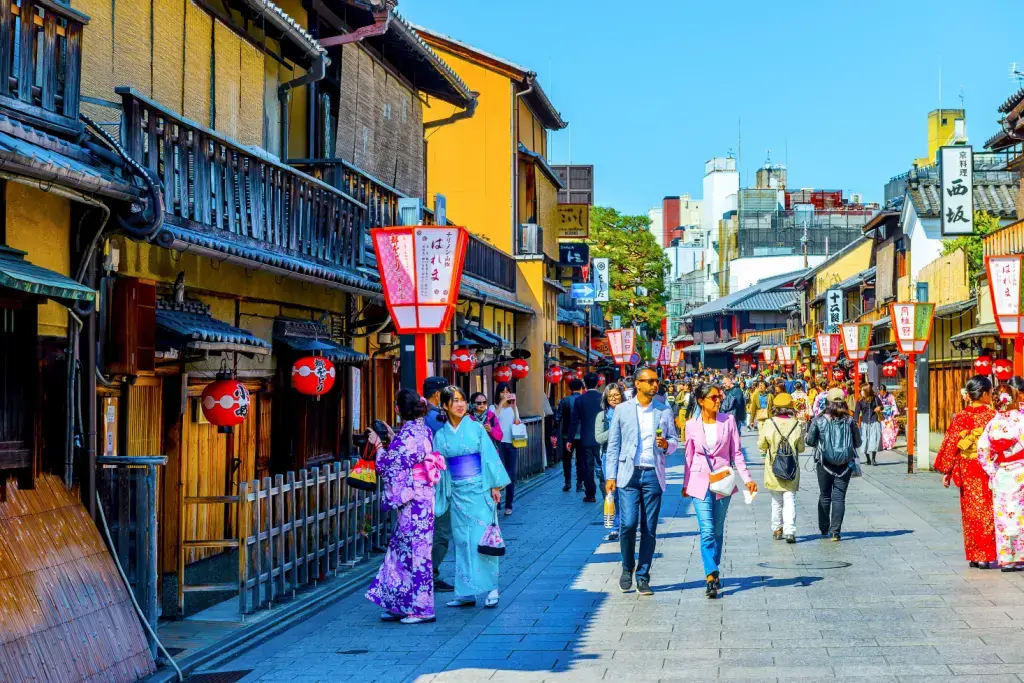
Well-preserved wooden townhouses from that era line narrow lanes like Hanamikoji, where kaiseki meals highlight fresh ingredients and seasonal flavors. This district center is a brief walk from Shijo Station, making access simple for evening explorations.
Are you looking for great snacks aftyer taking a walk around places like Kyoto? Check out Sakuraco! Sakuraco sends traditional Japanese snacks, teas, and sweets from local makers straight to your door each month!

Pontocho Alley
When it comes to scenic lanes near the Kamo River, Pontocho is probably the most well-known. Its convenient location, just ten minutes on foot from Kawaramachi Station, makes it perfect for nighttime visits. This area was originally a theater zone in the 1500s before gaining fame for its food and beverages.
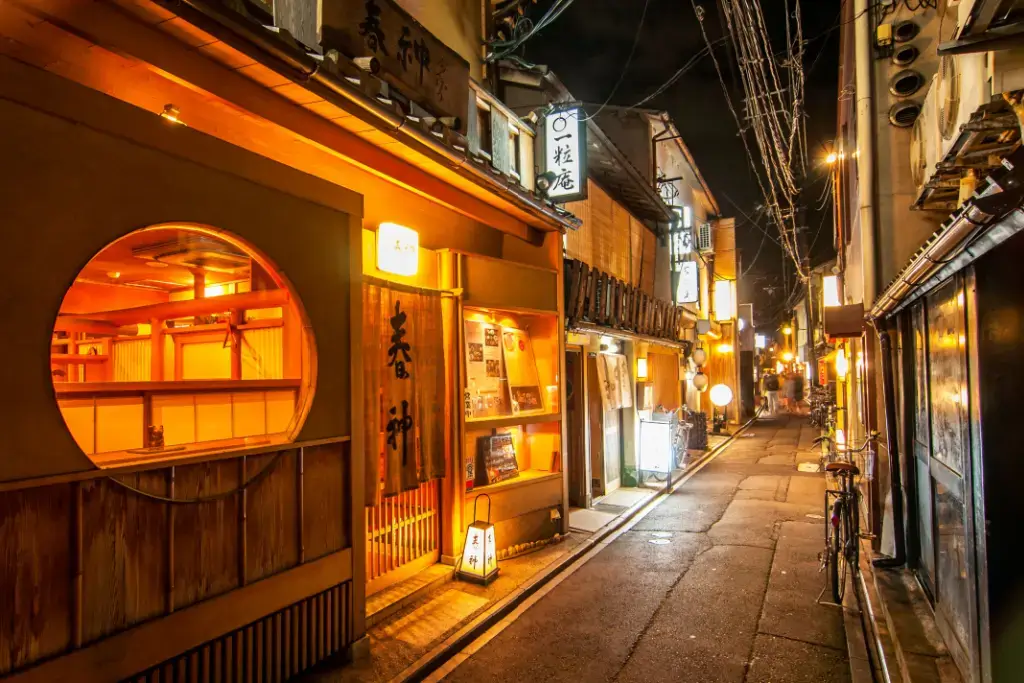
Pontocho’s narrow streets and the old Kyoto layout along the river reflect the city’s tradition of gatherings by the water. Moreover, many establishments provide outdoor seating along the riverbanks in pleasant weather. Local dining establishments hang lanterns from their raised wooden platforms, illuminating the waterfront. They are great for enjoying grilled items and elaborate courses, with sake options.
Kiyomizu-dera Temple
Kiyomizu-dera is on top of Otowa Mountain in the Higashiyama area. It was established in 778 during the Nara Period (710 – 794) to honor Kannon, the goddess of mercy. Its architecture includes a stage built without nails to extend above the slope below. Its history and traditional Japanese design earned it a UNESCO World Heritage Site designation in 1994.
Kiyomizu-dera’s hall and tower are illuminated in the evening. In spring, cherry blossoms catch and reflect the light in a deep shade of pink. And, in the fall, the red and orange foliage of the trees below is equally striking. A bus from Kyoto Station arrives at the foot of the hill in about 15 minutes. After ascending to the temple, entry after sunset costs 400 yen. There are also other famous holy sites in the area, such as Ginkakuji, Nanzenji, Eikando, and Heianjinu.
Fushimi Inari Taisha
Fushimi Inari is a Shinto shrine in southern Kyoto at the foot of Inari Mountain. It was founded in the year 711, before Kyoto became the capital of Tokyo. This shrine is devoted to one of the most widely worshipped kami in Japan, Inari, the deity of rice, agriculture, tea, and sake. It is from this popular Japanese god that many places in the surrounding area get their names.
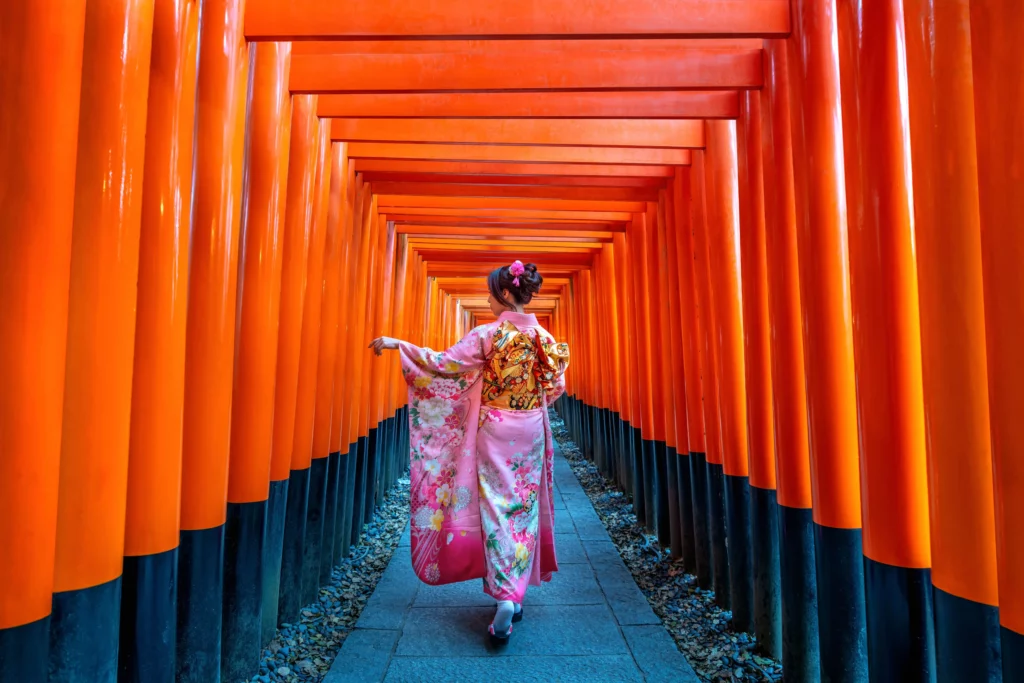
Fushimi Inari has numerous climbing trails and thousands of vermilion torii gates donated by merchants seeking fortune. Known as the Senbon Torii (thousands of torii gates), they line the paths leading from the main shrine up to Mount Inari’s forested summit. The bright red gates form a tunnel-like path for most of the hike. At dusk, the crimson arches are lit by lamps, providing tranquil paths for nighttime strolls. This must-visit attraction is a quick five-minute train ride from Kyoto Station to Inari Station, and entry is free.
Arashiyama Bamboo Grove
Arashiyama is a wooded bamboo area in western Kyoto along the banks of the Katsura River. The bamboo grove developed naturally over centuries, but rose to prominence during the Heian Period (794 – 1185) as a peaceful retreat. Since that time, the tranquility of its long swaying stems has been appreciated by nobles, put into verse by poets, and captured on canvas by artists.
After dark, subtle lighting guides visitors through the towering bamboo. And the nearby Tenryu-ji temple occasionally permits night observations, which adds even more options. There is no charge to wander the grove itself, which is only 15 minutes by train from Kyoto Station to Saga-Arashiyama.
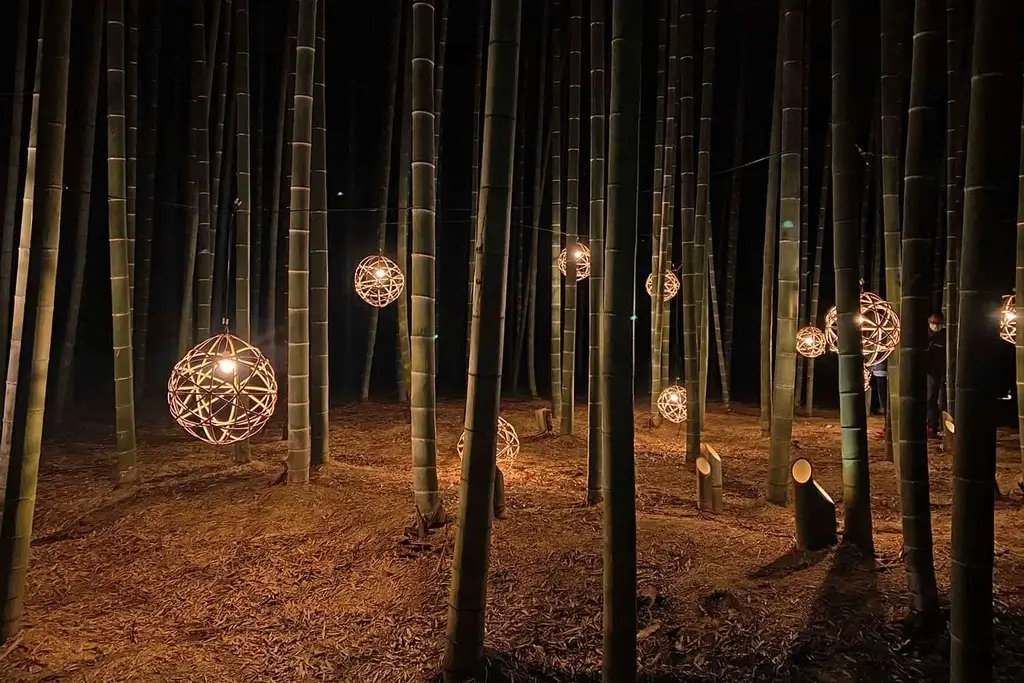
Why is Kyoto at Night so special?
Kyoto at night is so special because its nighttime Illumination highlights the mix of historical and spiritual attractions the city is known for. Evenings unveil a usually unseen dimension that can be explored and appreciated via glowing trails and radiant landmarks. Overall, walking through the city’s traditional scenery in the evening creates a more reflective mood that contrasts with that of the daytime and leads one to ponder the city being explored more deeply. Have you meandered along Kyoto’s routes or discovered a hidden, tranquil shrine? Share your tales in the comments!

Discover authentic flavors with Sakuraco
Get Sakuraco 
Discover authentic flavors with Sakuraco
Get Sakuraco
Related Articles
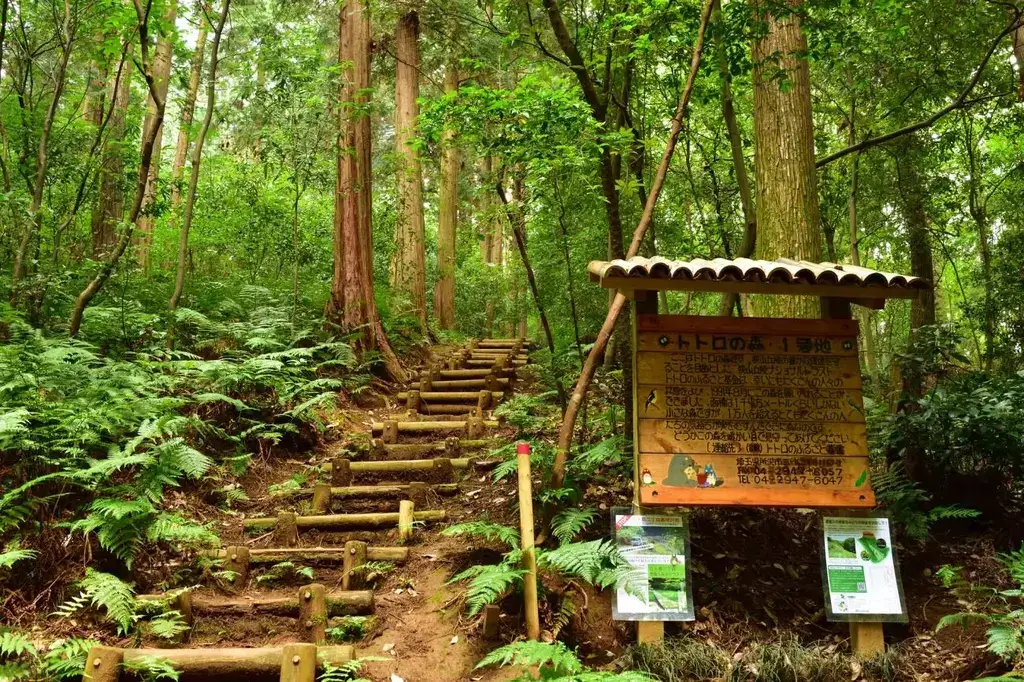
Forest Bathing in Japan: The Ultimate Guide
Japan is known for cultural traditions that promote balance, mindfulness, and a connection with nature. One of the most distinctive is forest bathing, or shinrin-yoku. Despite its name, forest bathing does not involve water.
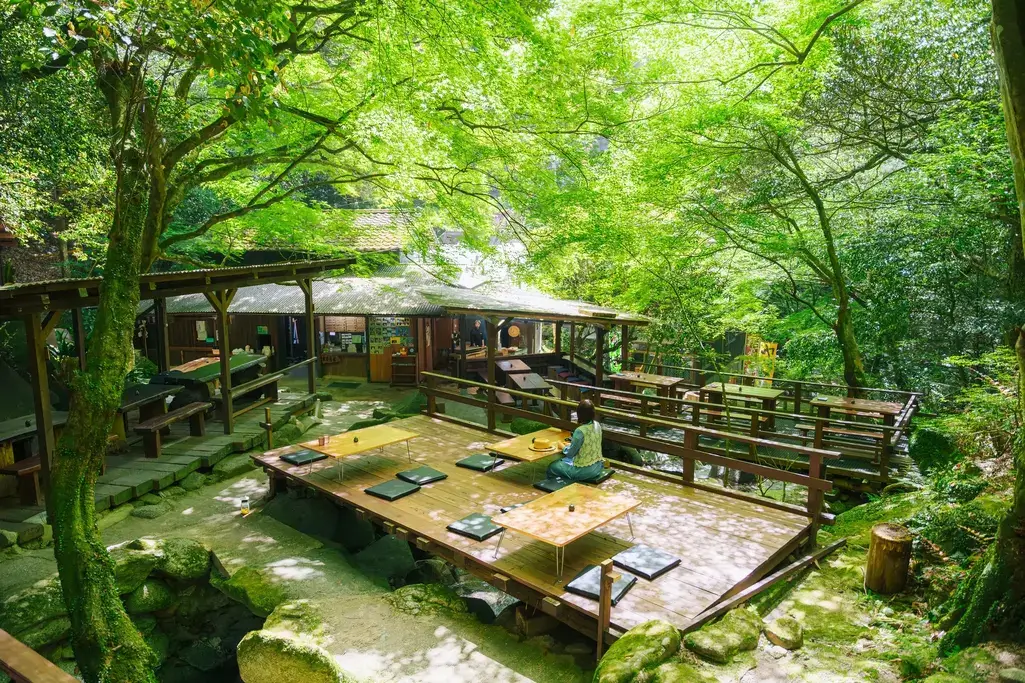
Kawadoko Dining in Japan: A Unique Riverfront Summer Tradition
Japan is home to many seasonal traditions that help people appreciate the changing environment. One of the most distinctive is kawadoko dining, an outdoor dining style that allows guests to enjoy meals beside or above flowing rivers during the warmer months. Known for its cool atmosphere and scenic surroundings, this riverfront dining tradition has become one of Japan’s most memorable summer experiences.
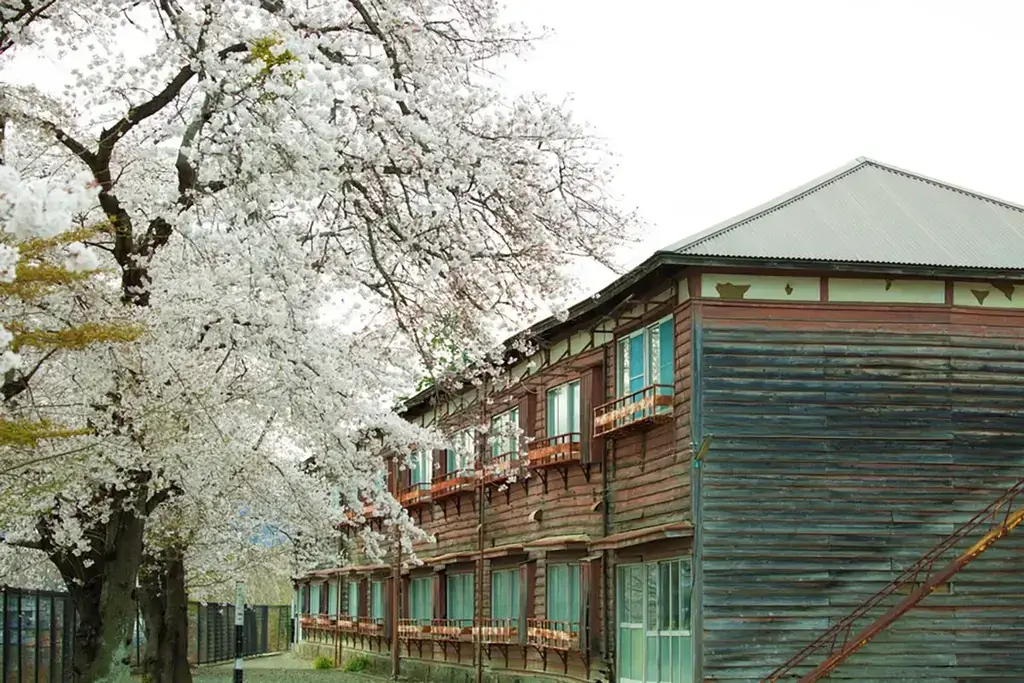
Tomioka Silk Mill: The Factory That Helped Modernize Japan
The Tomioka Silk Mill is one of Japan’s most important industrial heritage sites. Located in Tomioka City in Gunma Prefecture, the mill played a major role in Japan’s modernization during the late 19th century.
Hiroshima: History, Food, and Scenic Destinations
Hiroshima is one of Japan’s most historically important and culturally rich regions. Located along the Seto Inland Sea in western Japan, Hiroshima Prefecture is known for its history, food, and coastal scenery.