


White Heron Dance in Asakusa: A Timeless Tokyo Tradition

Thalia Harris

Posted on May 21, 2026
Share:
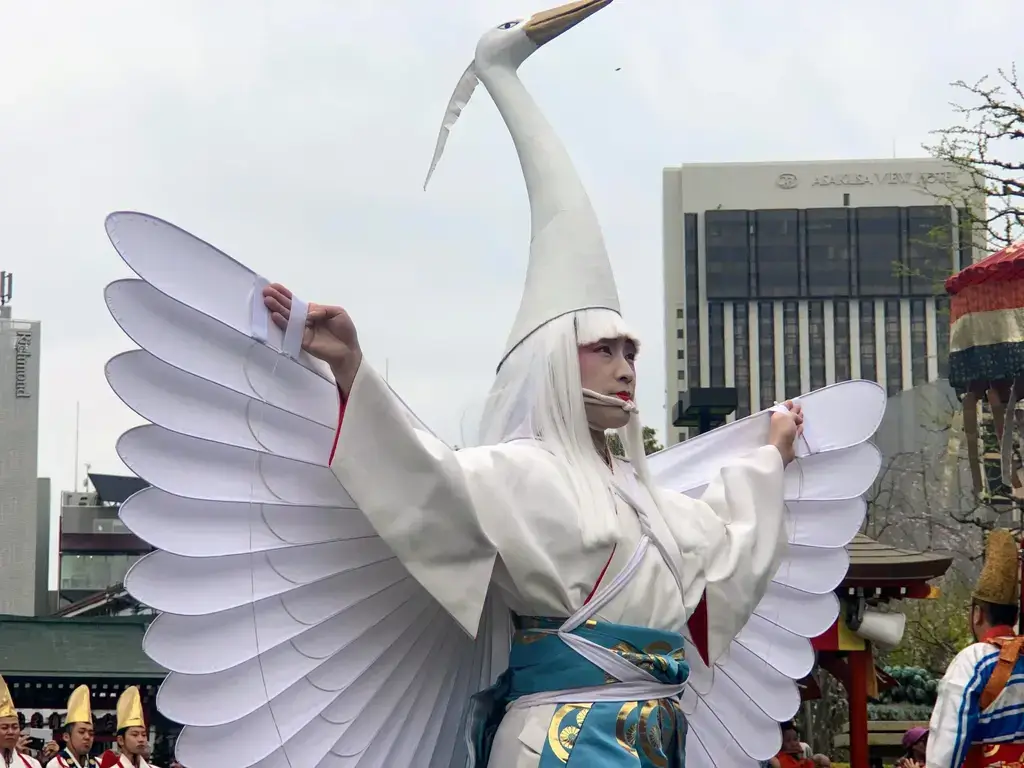
Each year in Asakusa, Tokyo, the white heron dance draws visitors to the historic grounds of Sensō-ji. Known as Shirasagi-no-Mai, this refined procession blends ritual, music, and striking costume design into one of the city’s most distinctive traditional events.
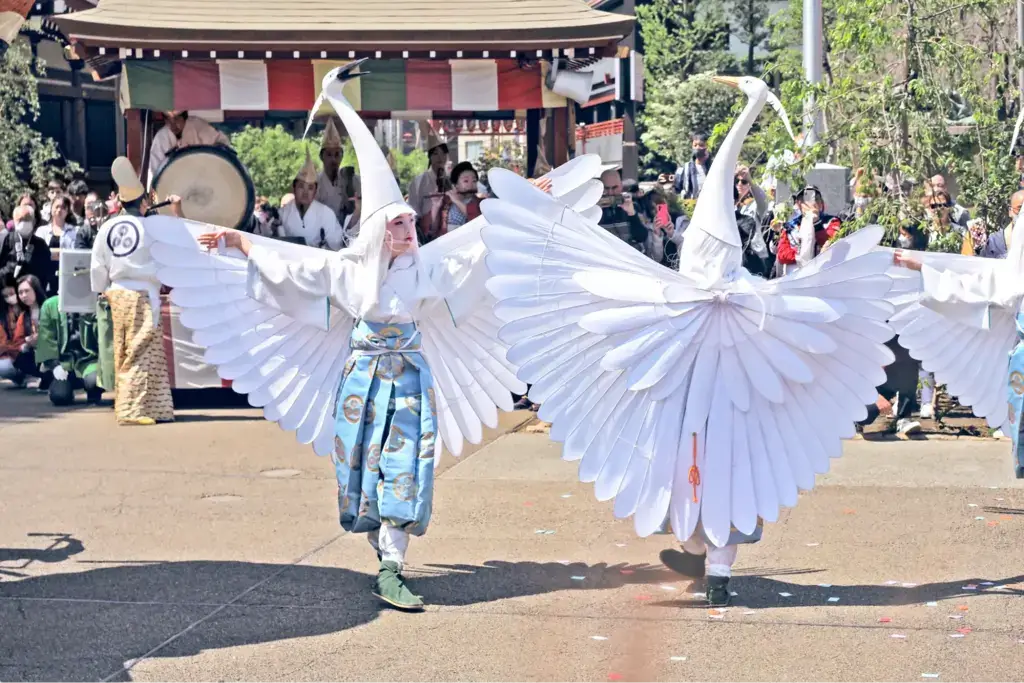
Unlike louder festivals, the white heron procession is calm and deliberate. Performers dressed as white birds move slowly through the streets in flowing robes and tall feathered headpieces. The result is a performance that feels ceremonial, controlled, and visually unforgettable. For travelers used to Tokyo’s fast pace, the white heron dance offers a rare moment of stillness in one of the busiest districts in the city.
Origins of the White Heron Dance
The modern white heron dance was revived in 1968 to mark 100 years since Edo was renamed Tokyo during the Meiji era. While the current event is a modern reconstruction, it draws directly on historical imagery associated with Sensō-ji and the surrounding Asakusa area. A key reference is the Keian Engi Emaki, a 1652 scroll that depicts ceremonial processions associated with the temple. These records suggest that heron-themed performances were part of Edo-period ritual life, even if the exact form has changed over time.
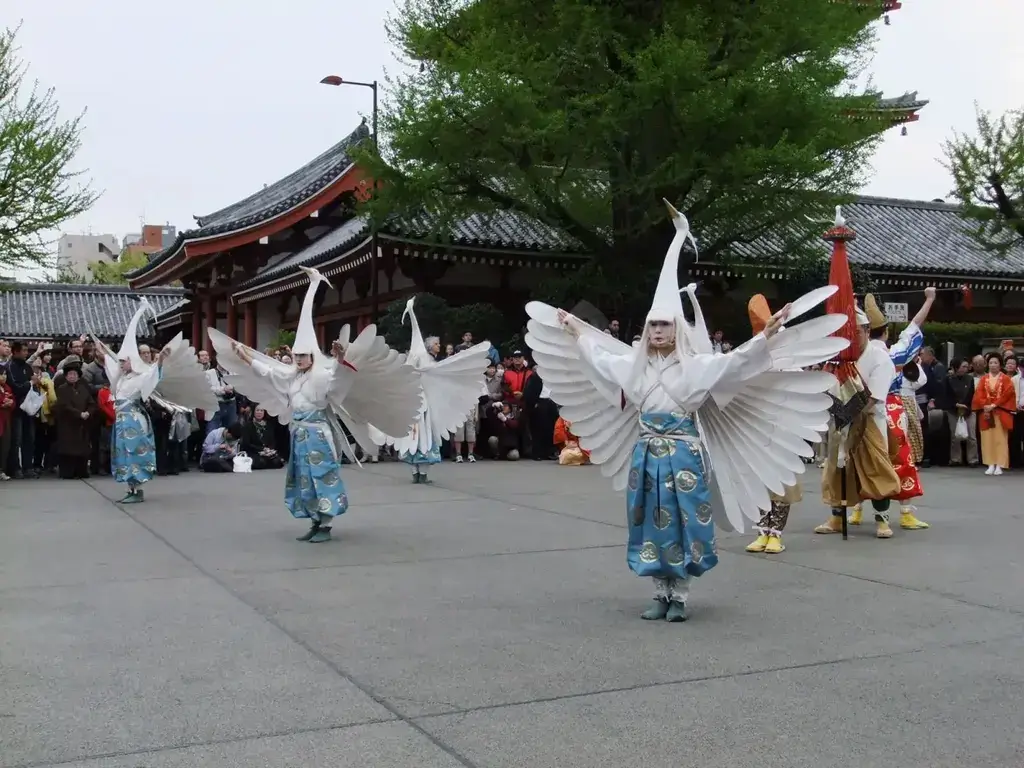
Heron imagery also appears in older festival traditions. Similar symbolic performances were linked to purification rites and prayers for protection, including those associated with Kyoto’s Gion Matsuri. The modern white heron event reflects these themes without claiming direct continuity, making it a revival rooted in history rather than an uninterrupted tradition.
Where and When to See the White Heron
The white heron dance is typically performed twice a year in Asakusa:
- Spring (usually the second Sunday of April)
- November 3 (Culture Day)
The procession moves through the streets around Sensō-ji, passing landmarks such as Kaminarimon and Nakamise-dori. This route creates a striking contrast. The white heron performers glide through one of Tokyo’s busiest tourist districts, turning everyday streets into a stage for historical pageantry. Visitors can experience the event without needing tickets, making it one of the most accessible traditional performances in the city.
Because the performance is held outdoors, it remains closely tied to the seasonal atmosphere. The spring event often coincides with mild weather and lingering cherry blossom season, while the November performance aligns with autumn crowds and cultural celebrations across Japan.
What the White Heron Dance Looks Like
The white heron dance is best understood as a ceremonial procession rather than a fast-paced performance. Movement is slow, measured, and precise, emphasizing grace over spectacle. Performers wear white, wing-like costumes inspired by classical Japanese court dress. Their tall headpieces and layered robes are designed to evoke the shape and movement of herons in flight. They are accompanied by musicians and attendants in traditional attire, including umbrella bearers and ceremonial guards.
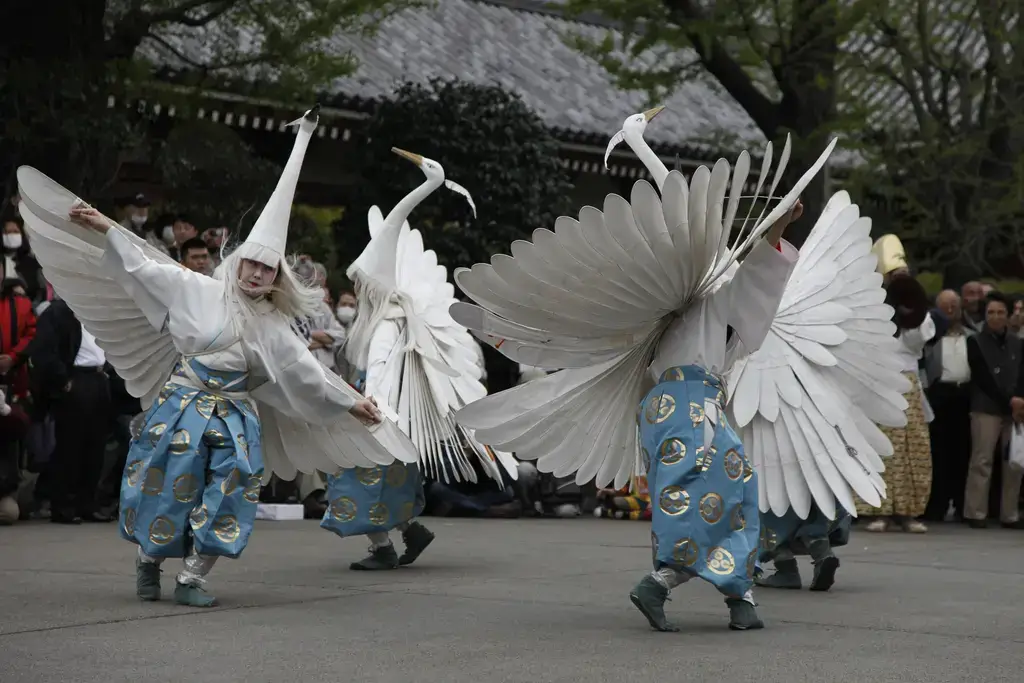
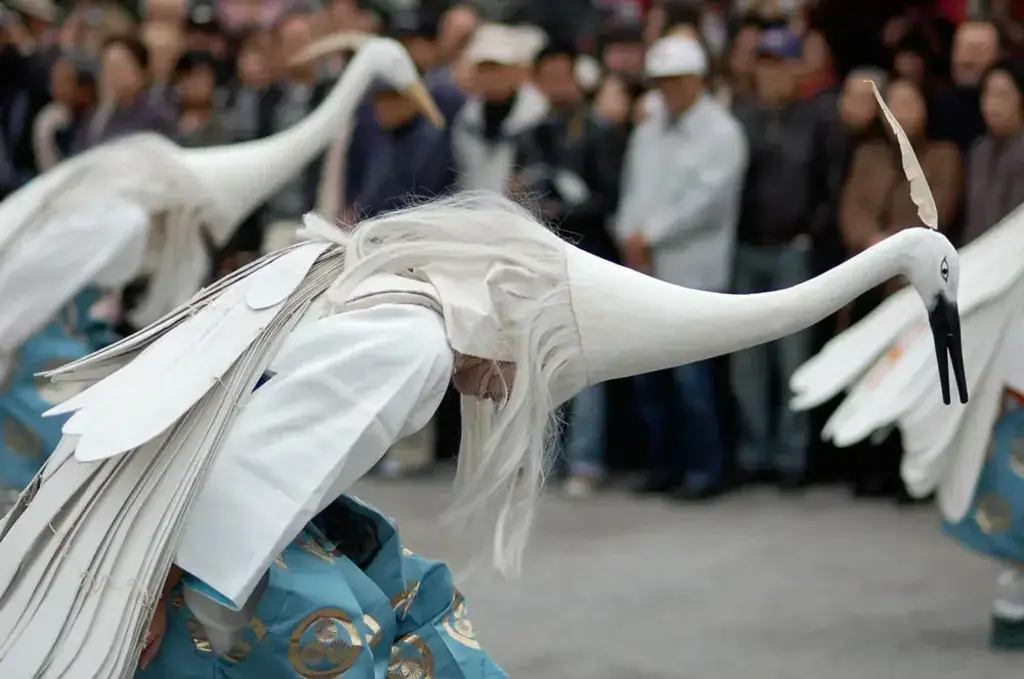
Court-style music sets the rhythm as the group advances through the streets. There is no dramatic choreography. Instead, the white heron performers circle and glide in controlled patterns, creating a visual rhythm that feels almost meditative. The movement’s simplicity allows the costumes and symbolism to take center stage.
Symbolism Behind the White Heron
The white heron carries a strong symbolic meaning in Japanese culture. Like cranes, herons are associated with purity, elegance, and spiritual balance. These associations are central to understanding the meaning behind the performance.
In this context, the white heron dance reflects older purification rituals. Historically, similar performances were associated with prayers for protection against illness, disaster, and misfortune. The imagery of white birds moving in unison reinforces themes of cleansing and renewal.
The visual contrast enhances this symbolism. Against the bright red structures of Sensō-ji and the busy streets of Asakusa, the white costumes stand out sharply. This contrast creates a striking visual effect that draws attention not only to the performers but also to the deeper meaning behind the ritual.
Are you looking for great snacks for the next spring? Check out Sakuraco! Sakuraco sends traditional Japanese snacks, teas, and sweets from local makers straight to your door each month!

Why the White Heron Dance Stands Out
Many Tokyo festivals focus on energy, noise, and crowd participation. The white heron dance offers the opposite: quiet precision and controlled movement. That difference makes the event especially appealing for visitors interested in traditional culture. The slower pace encourages observation. You notice the details—the texture of the costumes, the timing of the steps, and the way the procession interacts with its surroundings.
It also highlights a different side of Tokyo. While the city is often associated with modernity and constant motion, events like the White Heron Dance show how historical traditions continue to shape its cultural identity.
Tips for Watching the White Heron Dance
To get the most out of the white heron dance, a bit of planning helps:
- Arrive early to secure a good viewing spot along the route
- Stand near major landmarks like Kaminarimon for the best photo opportunities
- Check weather forecasts, as heavy rain may lead to cancellation
- Be patient—the slow pace means the procession takes time to pass
Because the event unfolds gradually, it rewards those who take time to watch rather than rushing through it.
A Living White Heron Tradition
The white heron dance is not an unbroken ancient ritual, but a carefully revived tradition rooted in historical records and symbolic meaning. That balance between past and present is part of what makes it compelling. In a city defined by constant change, the white heron procession offers a rare sense of continuity. It transforms modern streets into a space for reflection, even if only briefly.
For travelers seeking something beyond typical sightseeing, the white heron dance provides a deeper connection to Japan’s cultural landscape. Quiet, precise, and visually striking, it remains one of Tokyo’s most memorable seasonal events—and a unique way to experience the enduring symbolism of the white heron.
Discover authentic flavors with Sakuraco
Get Sakuraco 
Discover authentic flavors with Sakuraco
Get Sakuraco
Related Articles
Tsukimi in the Heian Court: Moonlight, Poetry, and Elegance
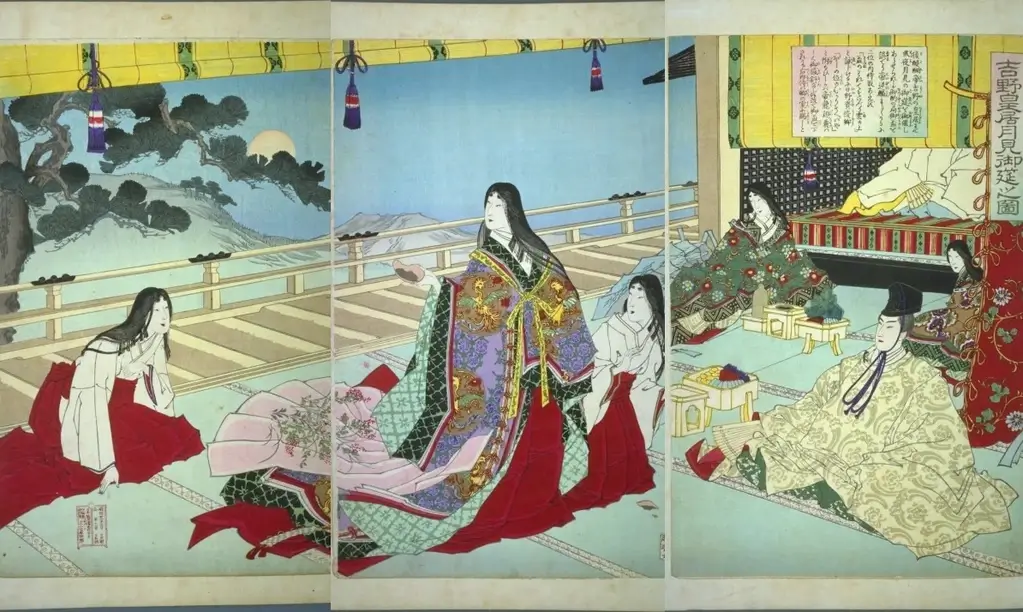
Ever since the Heian era (794-1185), the moon has been a symbol of beauty, emotion , and the passing of seasons. The tradition of tsukimi, or “moon viewing,” captures this idea perfectly.
What to Do for New Year’s 2025: Japanese Edition!
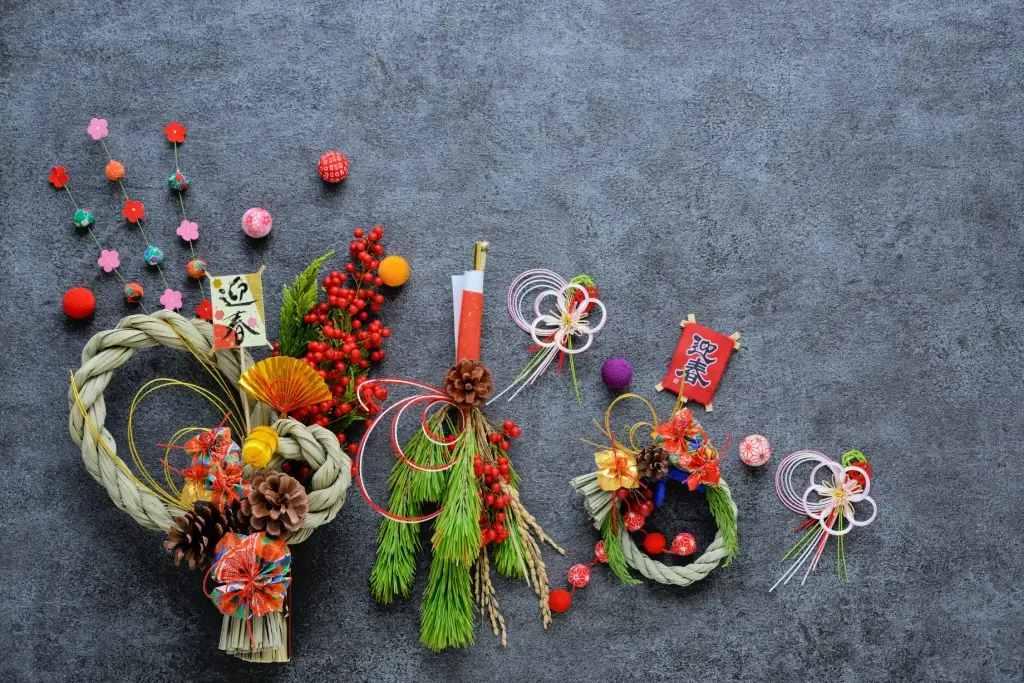
As it is an extremely big holiday, various events and traditions are held on this day every year. Wondering what to do for New Year’s 2025? Here are some typical Japanese New Year traditions and unique ways to celebrate the New Year in Japan.
Holiday Gift Guide 2024: Best Japanese Gifts from Sakuraco!
If you want to treat yourself or spread joy to others, this holidy gift guide is your gateway to the Japanese holiday season. Fill your celebrations with exquisite snacks, exclusive items available only in Japan, and limited-edition homewares. Join us at Sakuraco as we embrace the holiday spirit with authentic Japanese products that make perfect…